Every moving company deals with it: items that disappear without anyone knowing where or when. Not because people are careless, but because paper-based processes simply have gaps.
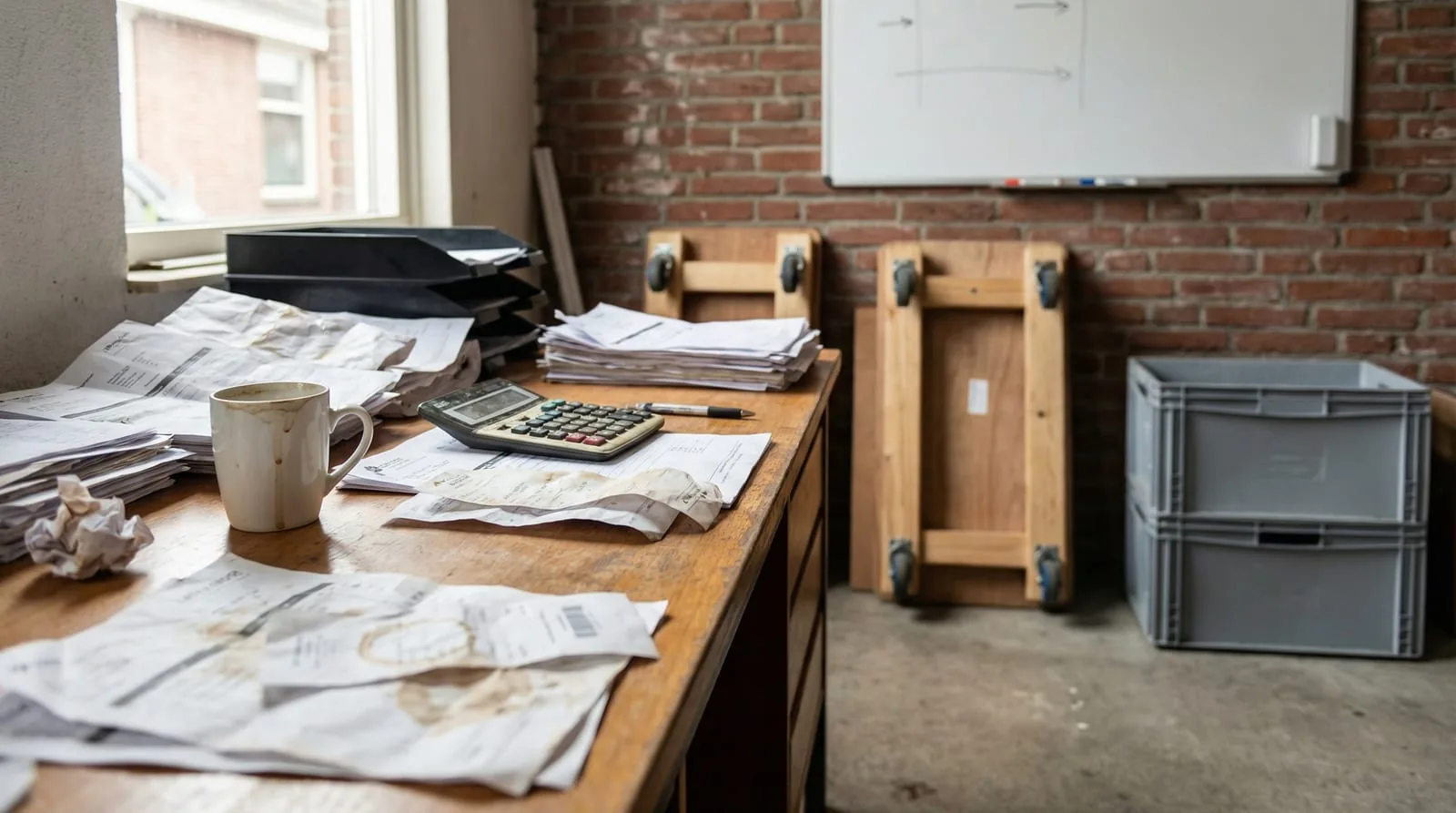
A crew loads the truck in the morning. Six dollies, two hand trucks, a stack of meter crates. At the end of the day, four dollies come back. Where are the other two? Nobody knows. It was never written down, so there is nothing to trace. Next week the same story. And the week after that.
Two dollies are not the end of the world in themselves. But add up the meter crates, hand trucks, ratchet straps, and packing materials that go missing throughout the year, and you are quickly talking about thousands of euros in materials that vanish annually.
The work order: the weakest link
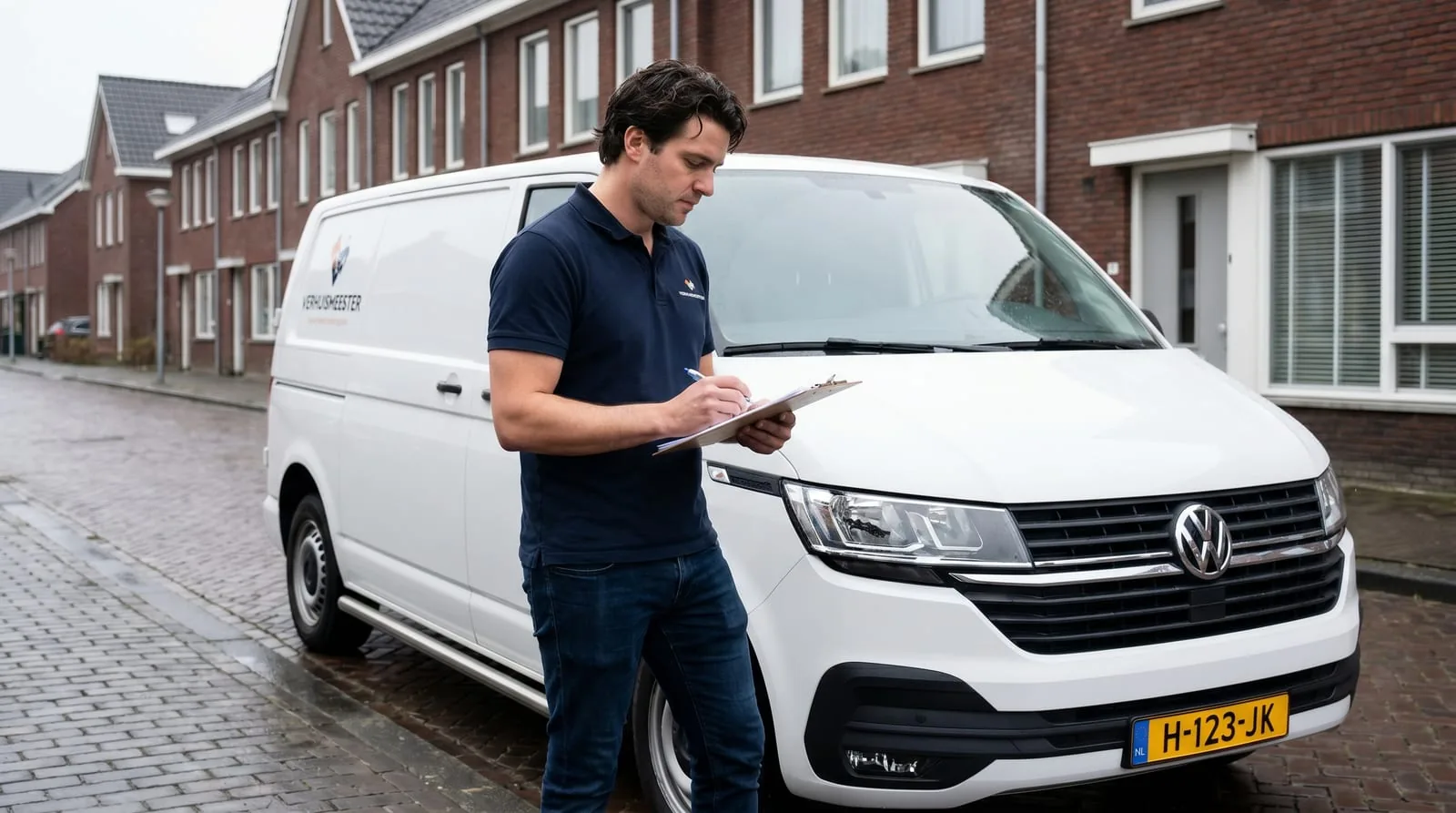
Ask any mover about work orders and you will get a sigh. It is perhaps the most frustrating part of the entire process. A driver who has to fill out a form with cold hands after a long day. Handwriting that is impossible to decipher at the office. Forms that get wet, tear, or simply get lost between the seats of the cab.
And then someone at the office has to retype all those forms. That does not just cost time - it is also where mistakes happen. A 3 that looks like an 8. A street name that gets misread. Extra hours that are not clearly noted on the form and therefore never get invoiced.
"We only discovered that we were structurally missing hours when we switched to digital registration. We were invoicing an average of 45 minutes too little per job."
Especially for jobs billed by the hour or commercial moves on a cost-plus basis, that is an expensive mistake. If you fail to invoice half an hour to an hour per move because the work order is unclear, with ten moves per week you are already missing hundreds of euros per month. Money you have earned but that never reaches your account.
What you don't measure, you can't improve
The tricky thing about paper-based processes is that you have no idea what you are missing. You don't know how much material disappears because you have no overview of what goes out and comes back. You don't know how many hours go uninvoiced because you can't compare the work order with the actual time. You don't know which crew works efficiently and which doesn't because you have no data to compare.
That lack of insight makes it impossible to course-correct. You can only improve something once you know where things go wrong. And with paper-based processes, you simply don't know. You have a feeling it could be better, but you can't back it up with numbers.
The customer notices it too
Paper-based processes don't just have internal consequences. Your customers notice it too. A quote that takes too long because someone can't find the Excel file. A schedule that is communicated by phone and then turns out differently than agreed. An invoice that doesn't match what the customer expected because the work order was incomplete.
And when a dispute arises? You have no proof. No digital record of what was agreed, what was taken, how long the work lasted. It becomes your word against the customer's. And in that situation, you always lose - whether you are right or not.
From paper to digital: less scary than you think
Many moving companies postpone the switch because it seems like a massive undertaking. And honestly: if you want to change everything at once, it is. But you don't have to. The smartest approach is to start where the biggest pain point is.
For most companies, that is the work order. Replace the paper form with a digital version that your drivers fill out on their phone. No special device needed, no complicated app - just a screen where they enter the hours worked, material usage, and any notes. That information is immediately available at the office, readable and complete.
That single change already solves a lot. No more illegible forms. No more retyping. No more disputes about hours that were or weren't worked. And you immediately have data to analyze how your business is running.
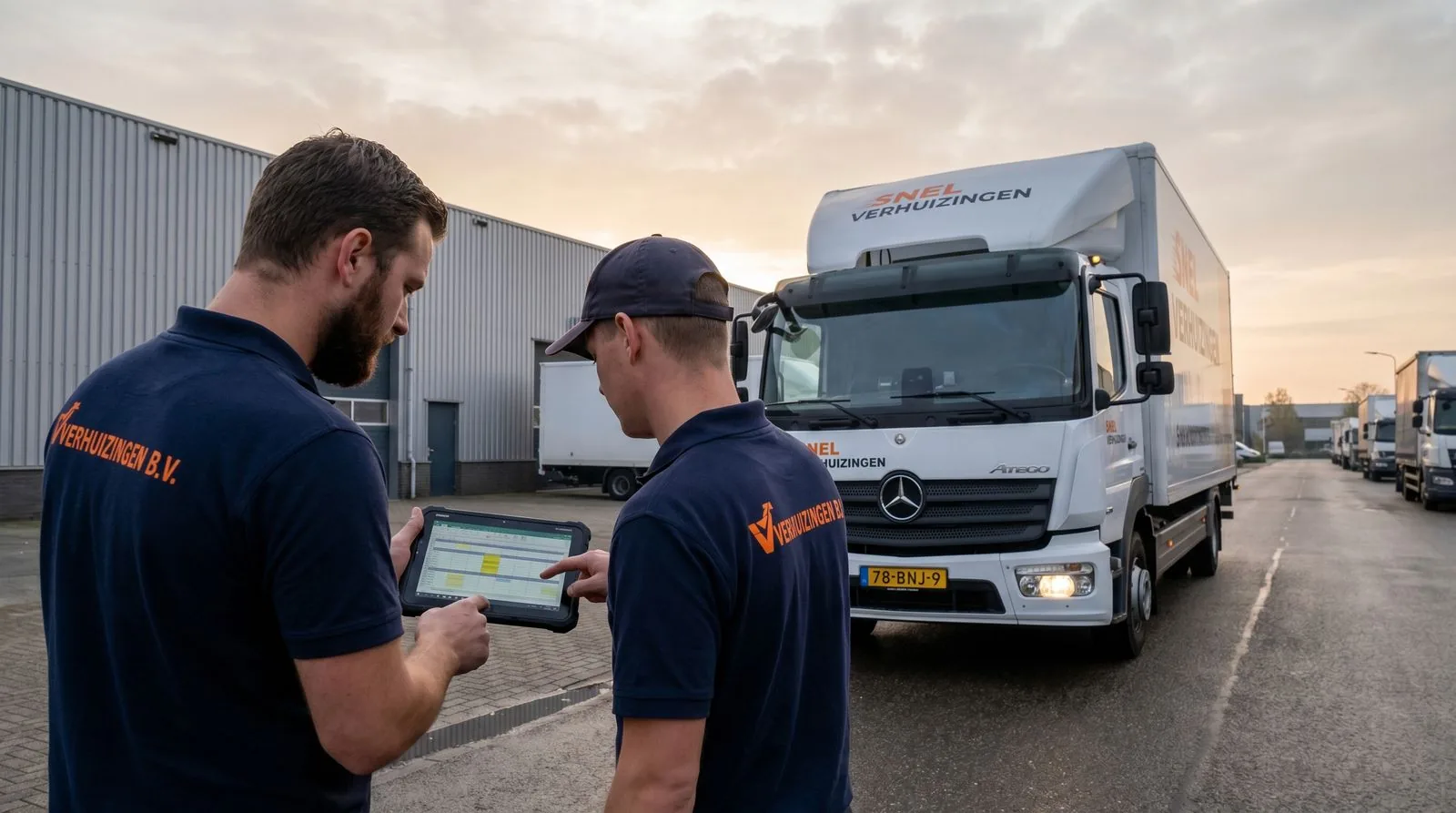
From there, you can expand step by step. Digital quotes that go out faster. A planning overview that everyone can see in real time. Material tracking so you know what goes out and comes back. Not everything at once, but at a pace that suits your company.
The cost of doing nothing
It is easy to keep using paper-based processes. They work, they are familiar, and change takes effort. But doing nothing also has a price. Every week you continue with paper work orders, you lose hours you could have invoiced. Every month, materials disappear that you can't trace. Every year, you leave money on the table that could have been in your account with a few simple changes.
The moving companies that have already made the switch all ask themselves the same thing: why didn't we do this sooner?
"It's not about the technology. It's about finally seeing what's really happening in your business - and being able to act on it."
Shall we grab a coffee?
Let's talk about how things can be smarter at your company.
Online or on location - you choose.