Containerised storage software for removal companies
The end of the month, and someone has to work out who’s still in store. A container went out a fortnight ago, a couple came in last week, and the storage invoices are due on Friday. For plenty of removal companies, that’s an afternoon with a spreadsheet and a walk round the warehouse.
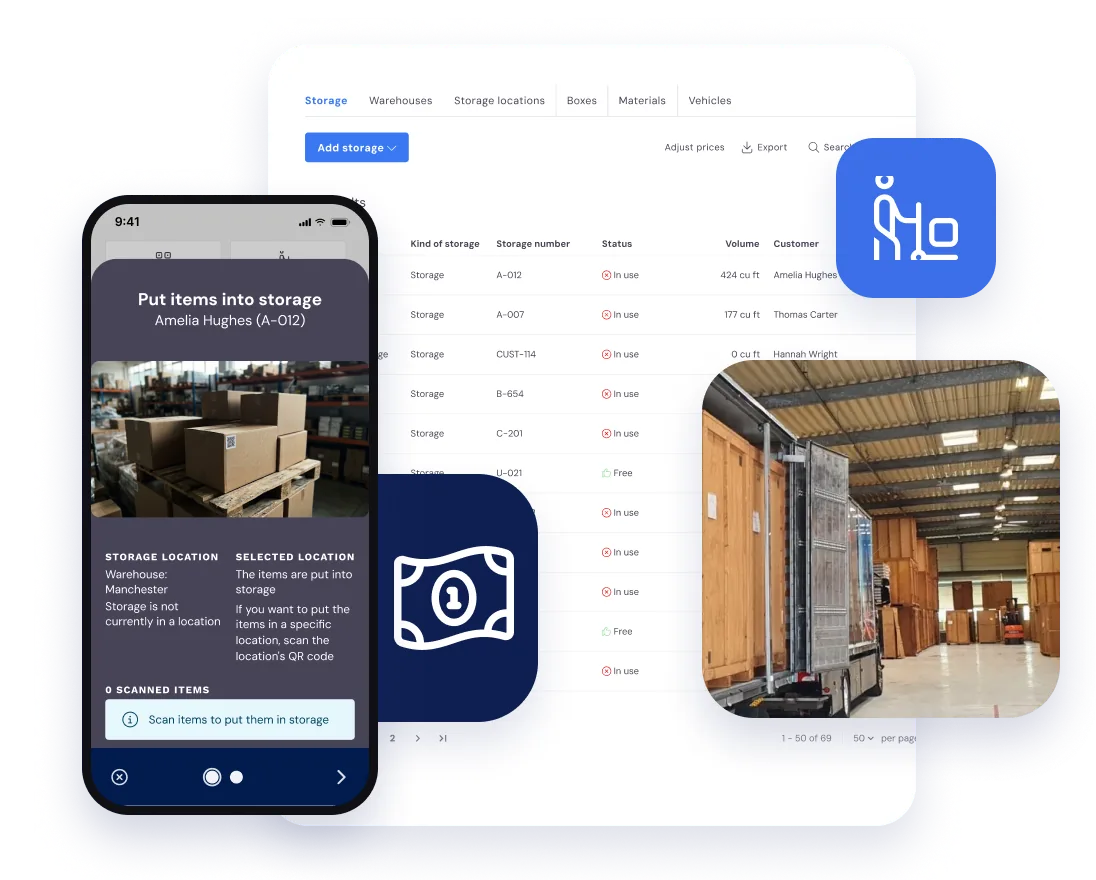
In Bas, every container has its place in your warehouse and belongs to a customer. Warehouse staff scan it in and out, and the storage invoices are ready every period without anyone counting.
Storage should pay its way every month, not just the months somebody remembers to invoice it.
Your warehouse, set out the way it really is
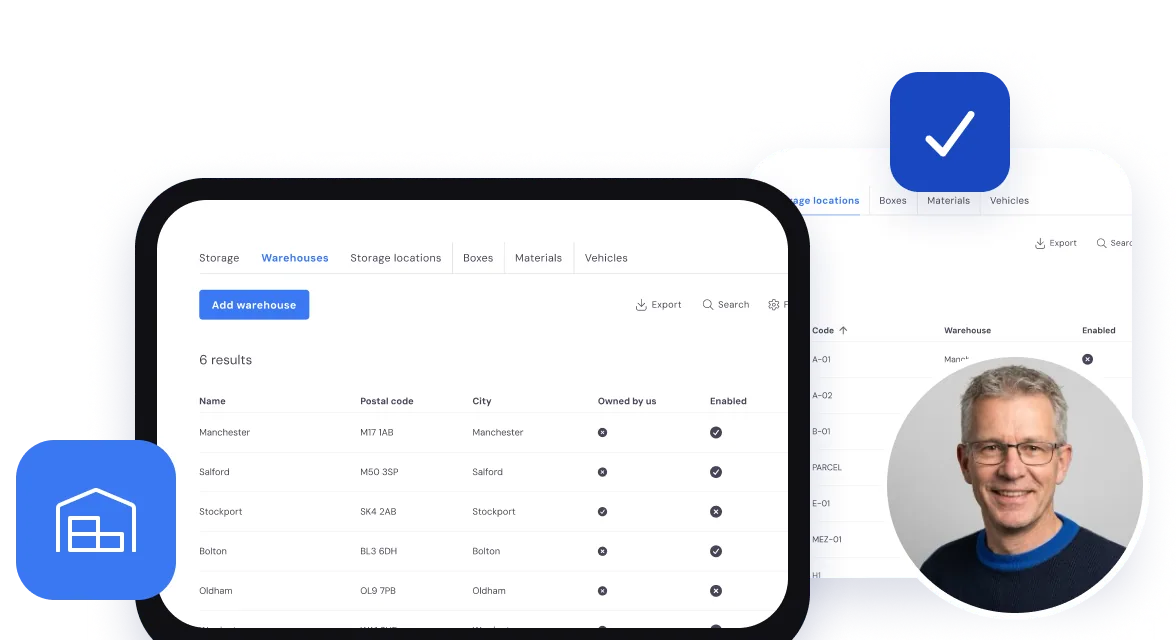
You start by creating your warehouses. Then you divide each one into rows and bays, the way your staff already talk about them. Finally you load in your containers and link each one to the customer it belongs to.
From then on, the office can see where anything is without going to look.
Several warehouses or branches? Read how Bas works for larger removal firms.
Into store on the day of the move
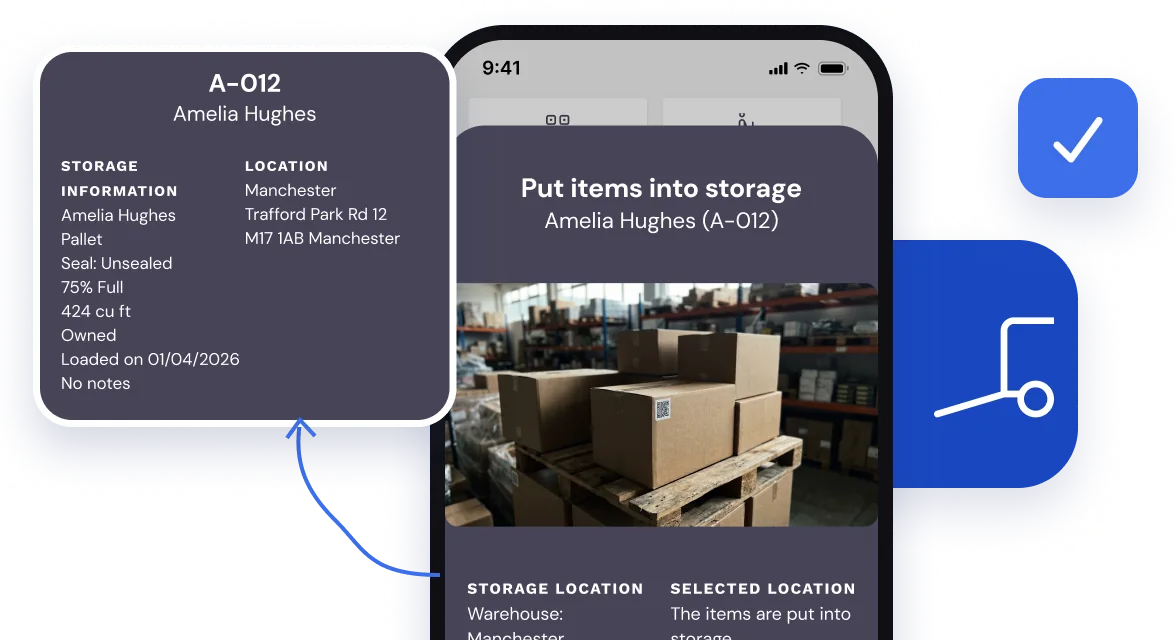
Follow one customer. Their house is sold, the new one isn’t ready, and the contents go into store for a couple of months.
When the van gets back to the yard, warehouse staff scan the container and book the goods in against that customer. In the office you see what they have in store, where it is and since when.
A price for each customer, agreed once
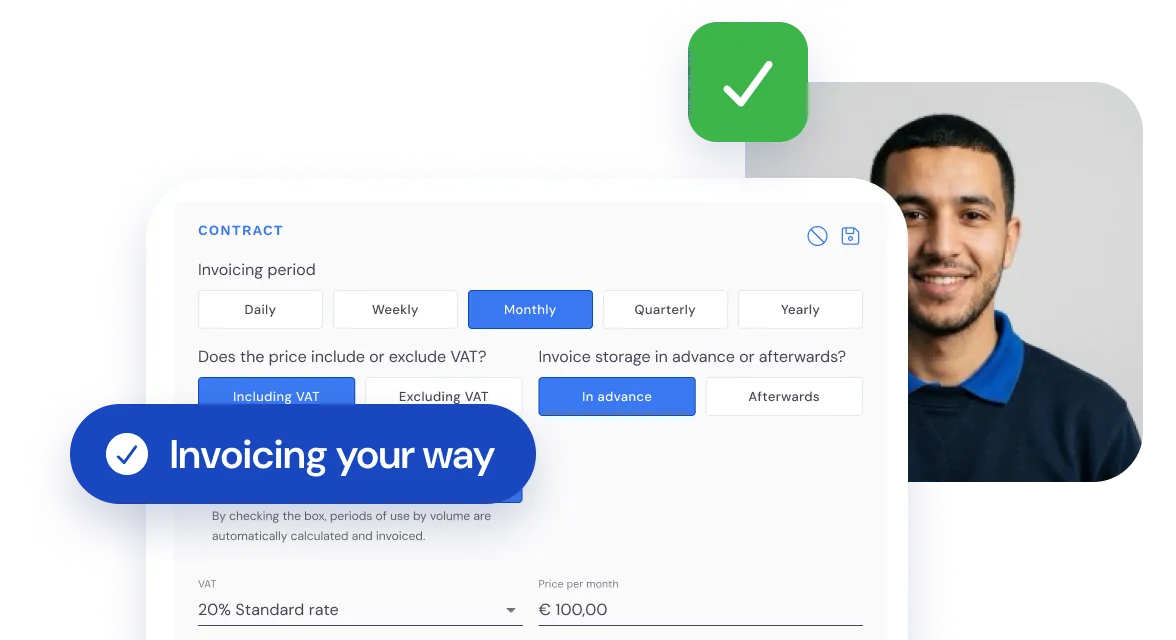
When the goods go in, you set the customer’s price at the same time. Charge by the container or by volume, whichever suits the job.
You also choose how often to invoice, from daily to yearly, in advance or in arrears, and whether the price includes VAT.
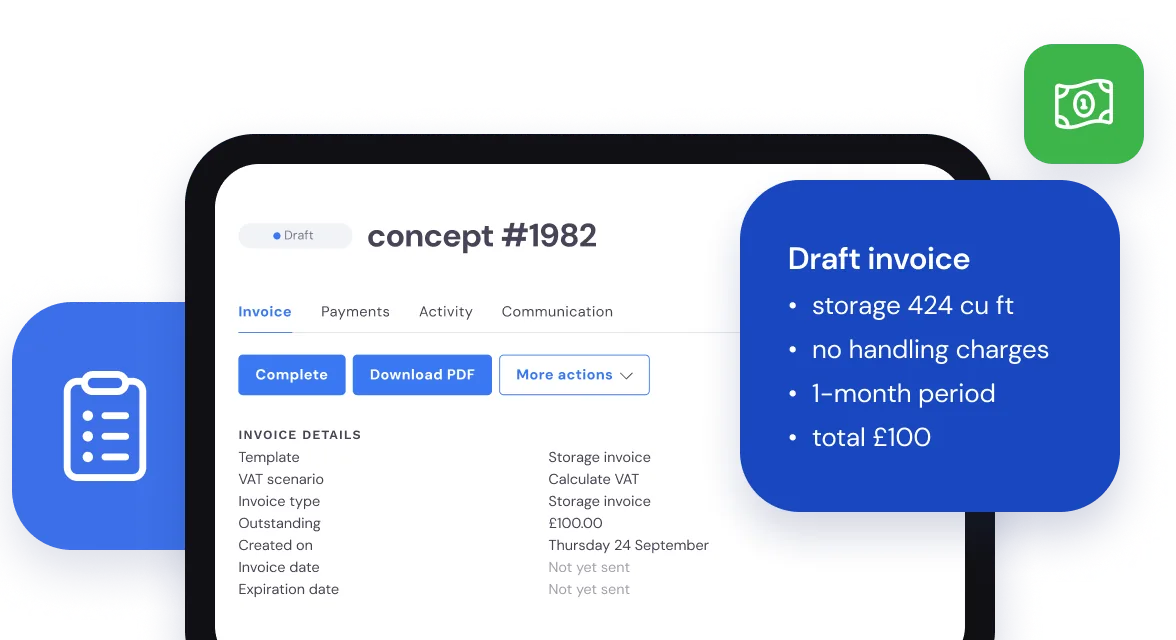
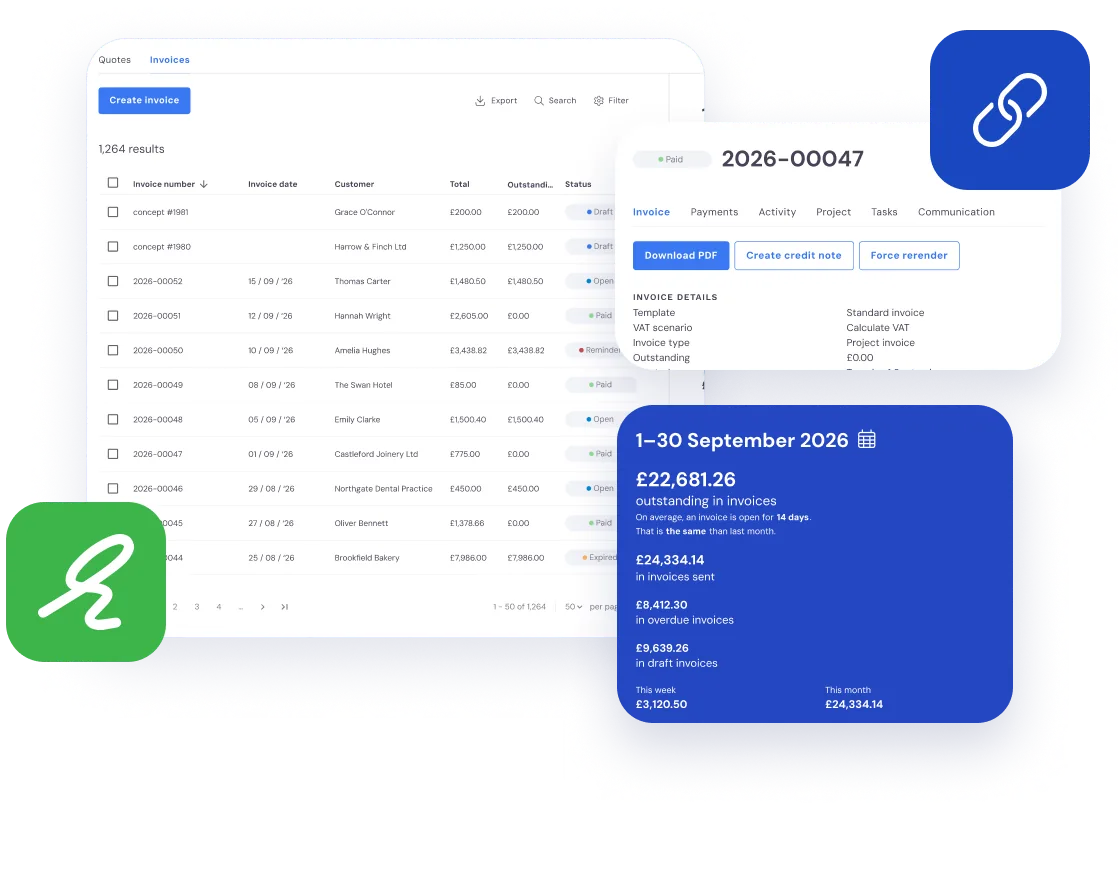
The storage invoice is ready every period
Once the price is in, Bas prepares the customer’s storage invoice every period, ready to send. If you make a handling charge for each movement in or out, that goes on the invoice automatically.
You’ll find it in Invoicing, next to the invoices for your removals.
A spreadsheet of who’s in store is only right until the next container moves.
A scan, not a spreadsheet
The records change when warehouse staff scan a container, not when somebody types it up later.
No forgotten month
The price and the period are set once, so an invoice can’t slip through because the person who usually does it was on holiday.
A login just for the warehouse
Warehouse staff get their own role in Bas, which shows them the storage side of the office and nothing else.
When a customer wants some of it back early
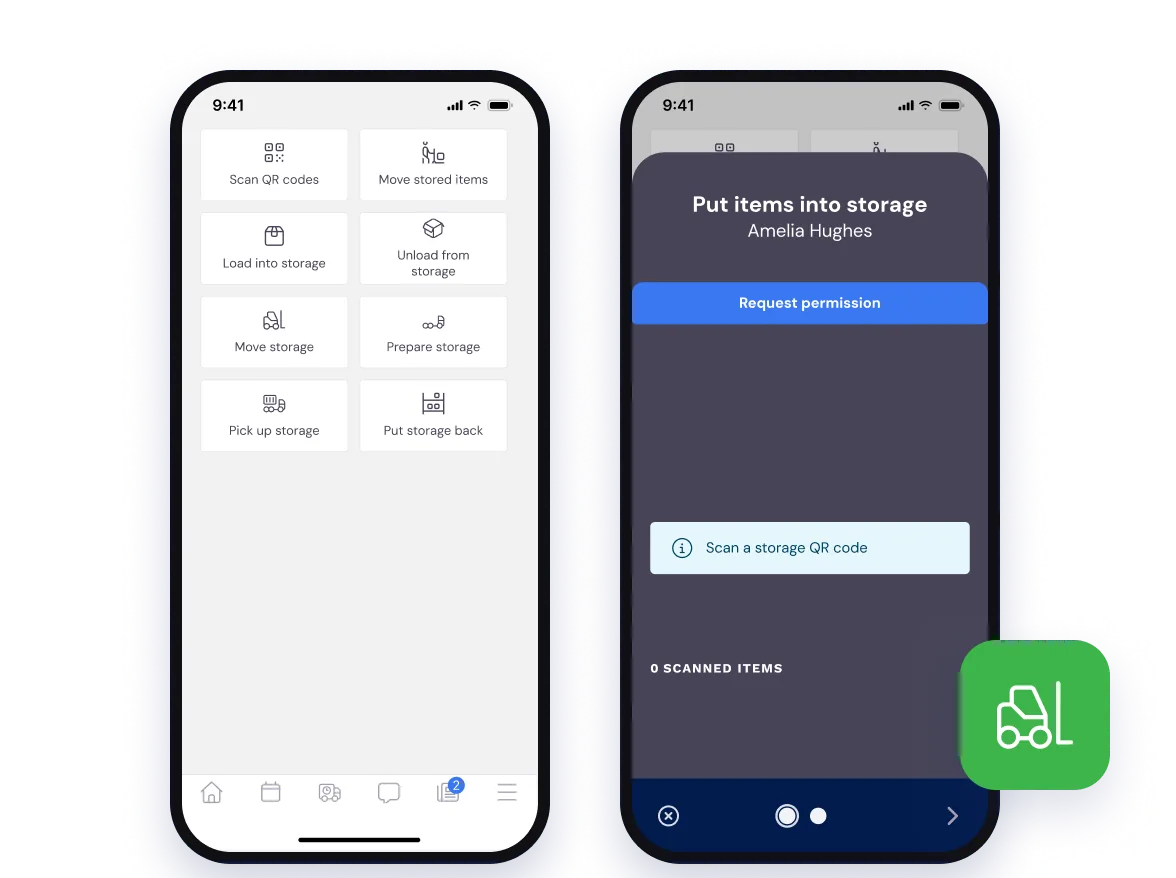
The new house is ready, but the garage isn’t, so the customer wants the furniture now and the rest later. Warehouse staff open the app, scan the container and book out what’s going. What stays can be moved to another bay the same way.
If the last of it goes out partway through a period, Bas invoices the part period pro rata, so you don’t have to work it out on the back of an envelope.
Questions about containerised storage
What removal companies ask us most, with a short answer to each.
Yes. You set out each warehouse in rows and bays, load in your containers and link each one to a customer. Goods in, moves within the warehouse and goods out are booked from the office or with a scan in the app, so you always know where someone’s belongings are and how long they’ve been in store. Read more in How many boxes do you lose per year? The hidden costs of paper-based processes.
Yes. Every container and every location gets a QR code label, and warehouse staff scan it with the crew app when they book goods in, move them or book them out. The records change when they scan, not when someone types it up later.
Yes. You set the customer’s price once, by the container or by volume, and choose the period: daily, weekly, monthly, quarterly or yearly, in advance or in arrears. Bas then prepares the storage invoice every period, ready to send. A handling charge for each movement goes on the invoice automatically.
The part period. Bas works out the storage for a part period pro rata, so you don’t give a fortnight away or charge for one the customer didn’t use.
Yes, with the customer portal, an add-on to Bas. They see their stock with photos and book a delivery or a collection themselves, and you pick and deliver it. That way you can offer fulfilment as well as storage. Read more in TMS for removal companies: when do you need one?.
Yes. Warehouse staff get their own role in Bas, which gives them the storage side of the office and nothing else.
Storage invoices, next to every other invoice
Storage invoices sit in Invoicing alongside the invoices for your removals, so the month’s invoice run is all in one place.