Overtime rates and allowances, worked out by Bas
The end of the pay period at most removal companies. Someone has to go through every timesheet to see who worked the Saturday, who went over their hours and who’s owed a meal allowance for the long run to Scotland. Get one wrong and you’ll hear about it on payday.
Bas works out the rates, allowances and breaks for your removers from the approved hours and the rules you set. At the end of the period, everything is ready for payroll.
Bas comes with a default set of rules taken from the Dutch collective agreement for removers, which is where Bas started. Your contracts are your own, so you change each percentage and threshold to match them.
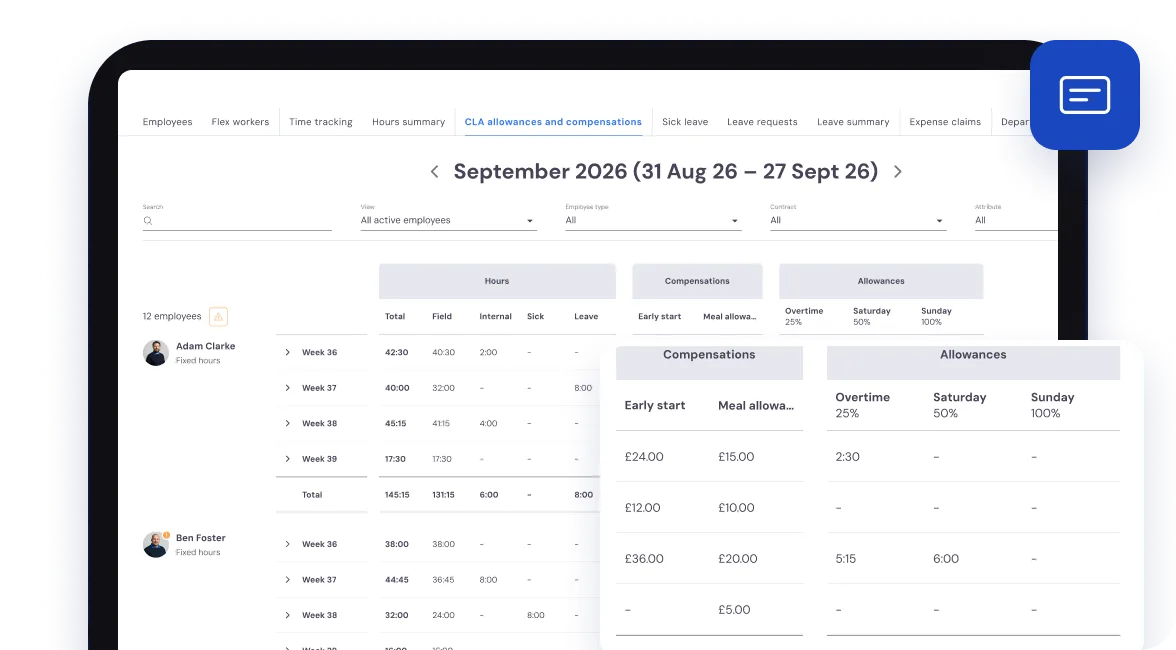
Overtime, Saturdays, Sundays, bank holidays and nights, each with a percentage you set yourself.
Overtime
Above a threshold per day or per week, for example 30% over 40 hours. Only the hours over the threshold get the higher rate.
Weekends and bank holidays
Saturdays, Sundays and bank holidays each have their own percentage, with a different one over 40 hours if you want. You set the bank holidays per branch.
Nights
For the hours inside the window you set, for example 19% between 9 pm and 5 am. Where two rules overlap, the higher percentage wins and no hour counts twice.
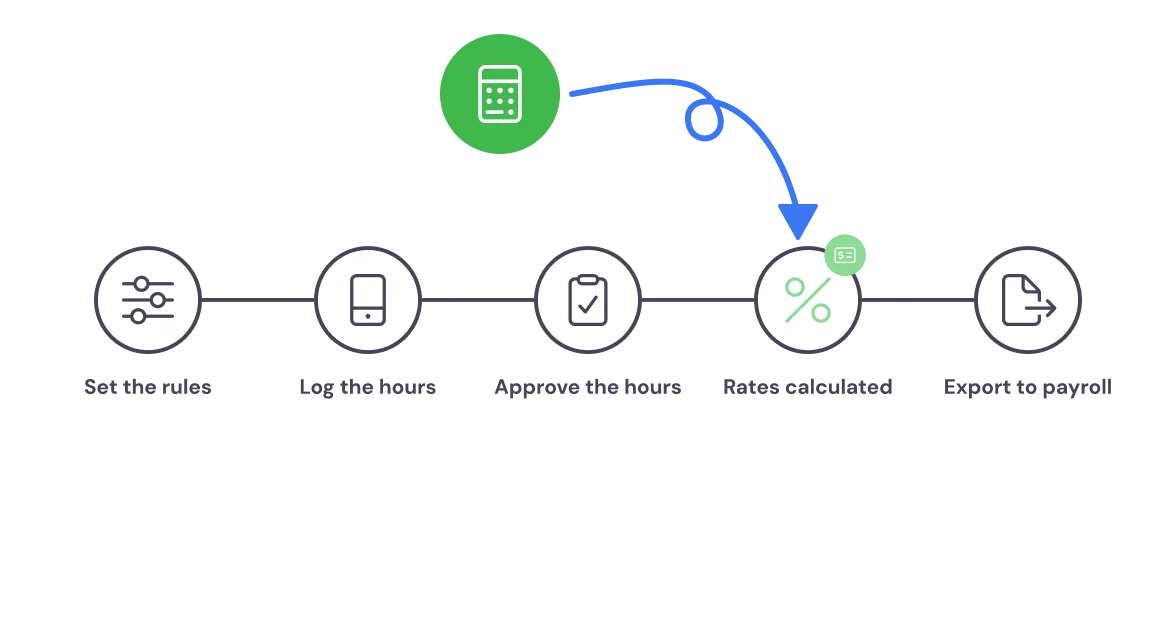
From timesheet to payroll, without the sums
You set the rules once, or start from the default set. Your removers log their hours in the crew app, and after the job the foreman confirms the crew’s hours.
You approve the hours in the office. Bas then works out the rates, allowances and breaks, and at the end of the period you export the lot to Excel for payroll.
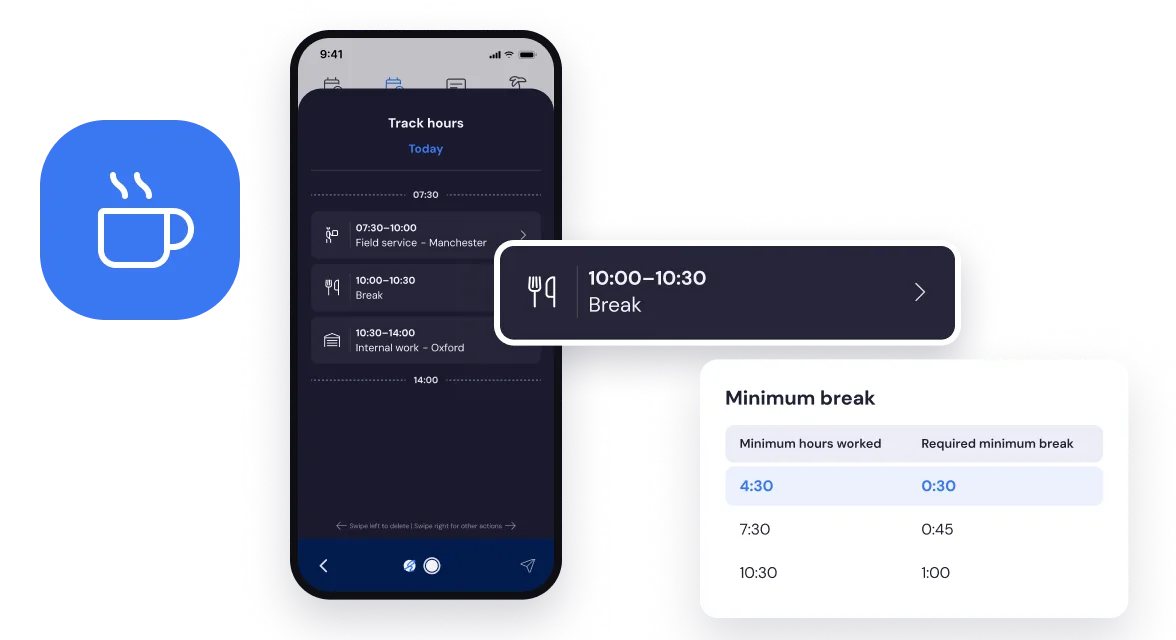
When a timesheet is missing a break
You set the break rules yourself: for example, anyone who works 4.5 hours takes at least half an hour, with a longer break as the day gets longer. The office can have a rule of its own.
If a break is missing from the hours, Bas puts it into the suggested hours your remover confirms in the app. If there’s too little or too much break, the office gets a warning.
A meal, an overnight stay or an early start
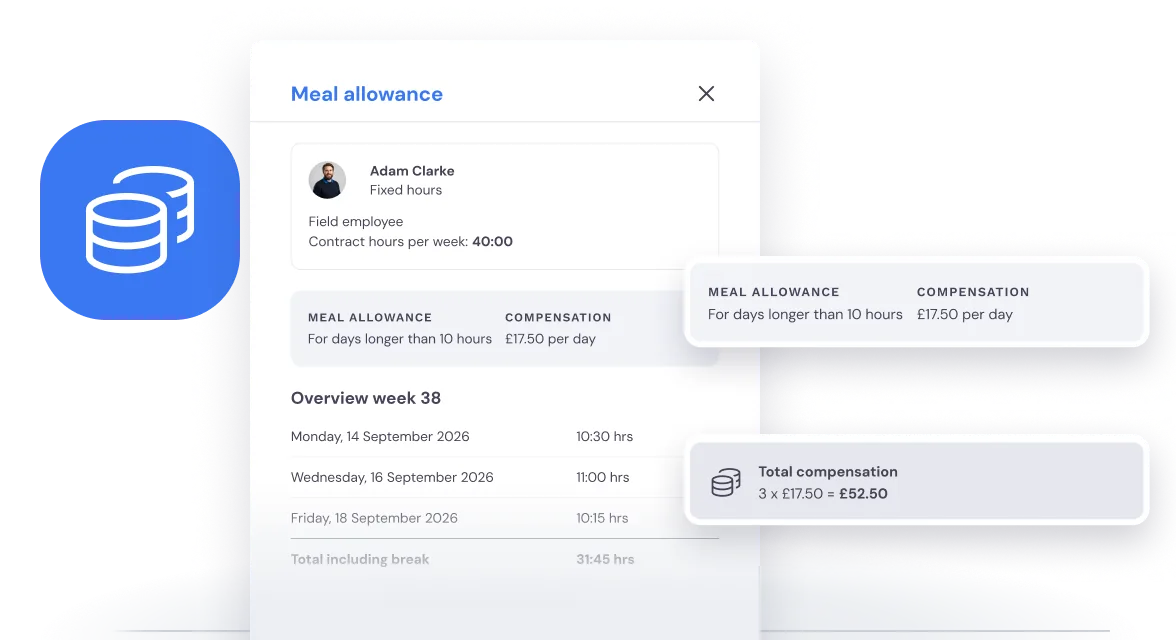
Fixed allowances are an amount per hour or per day. You decide when they apply, with conditions on the type of hours, the number of hours worked and the start and finish time.
So on a long run or an early start, your crew get exactly what was agreed. Expenses with a receipt are claimed separately in the app.
The crew and the office don’t work the same hours, so they don’t need the same rules.
Crew and office
A night rate for the crew, a break rule of its own for the office. Every rule applies to field staff, office staff or everyone.
Per contract
Fixed hours, variable hours, agency staff or staff employed through a payroll company: for each rule you choose which contracts it covers.
Per tag and period
Link a rule to a tag you give your staff. Every rule runs from a start date and, if you want, until an end date.
When hours haven’t been approved yet
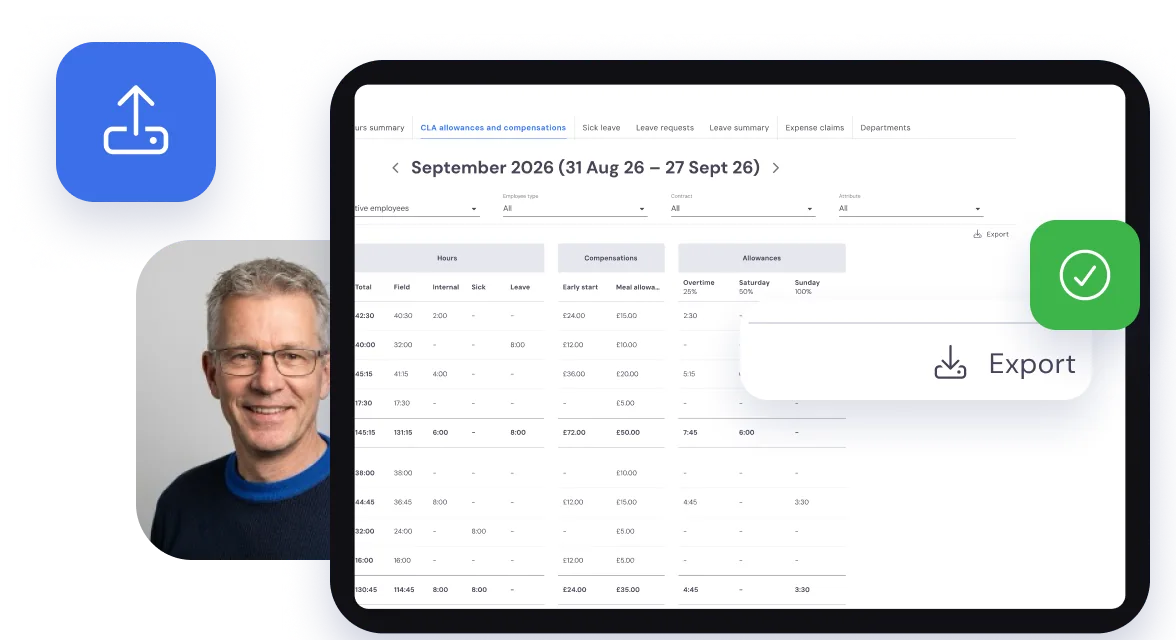
For each week and each day you see every member of staff’s hours: crew work and office work, sickness and holiday, with the rates and allowances alongside. Bas flags hours that haven’t been approved and hours below the norm, so nothing slips into payroll unchecked.
The period follows your pay period: weekly, every 4 weeks or monthly. One click exports the lot to Excel. Holiday and time off in lieu are kept as a balance for each member of staff in HR.
Questions about overtime rates and allowances
What removal companies ask us most, with a short answer to each.
Three kinds: overtime, weekends and bank holidays, and nights. Each one is a percentage on top of the hours the rule covers. For overtime, only the time above the threshold you set per day or per week counts. Where two rules overlap, the higher percentage applies and no hour is counted twice. Bas also works out fixed allowances per hour or per day, such as a meal allowance.
No. Bas doesn’t check your rates against UK employment law. The default rules come from the Dutch collective agreement for removers, where Bas started. You change the percentages, thresholds and break rules to match your own contracts, and your payroll provider or accountant remains the one to check them. Read more in Which collective agreement applies to Dutch removers? Surcharges, breaks and allowances explained.
No. When you start, Bas sets up the default rules for you: overtime, Saturday, Sunday, bank holidays, nights and breaks. After that you adjust them yourself under Settings, HR: for each rule you choose which contract type, staff type or tag it applies to, and from when.
Mileage, shift allowances and the reduced working hours (ADV) that some Dutch contracts have. If you pay those, you work them out yourself.
Straight into your payroll through the payroll link, or as an Excel export if your payroll provider or accountant prefers that. The overview follows your pay period: weekly, every 4 weeks or monthly.