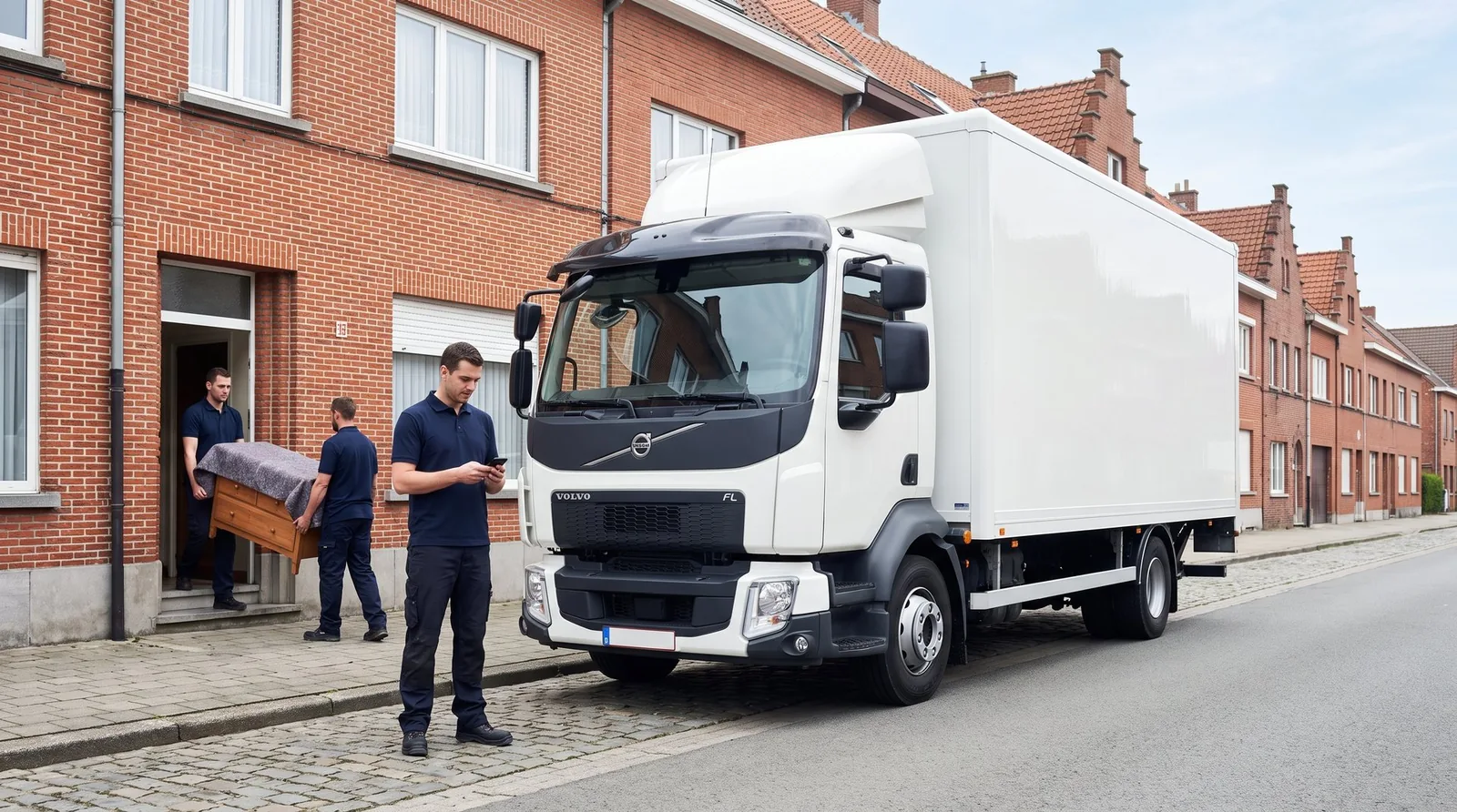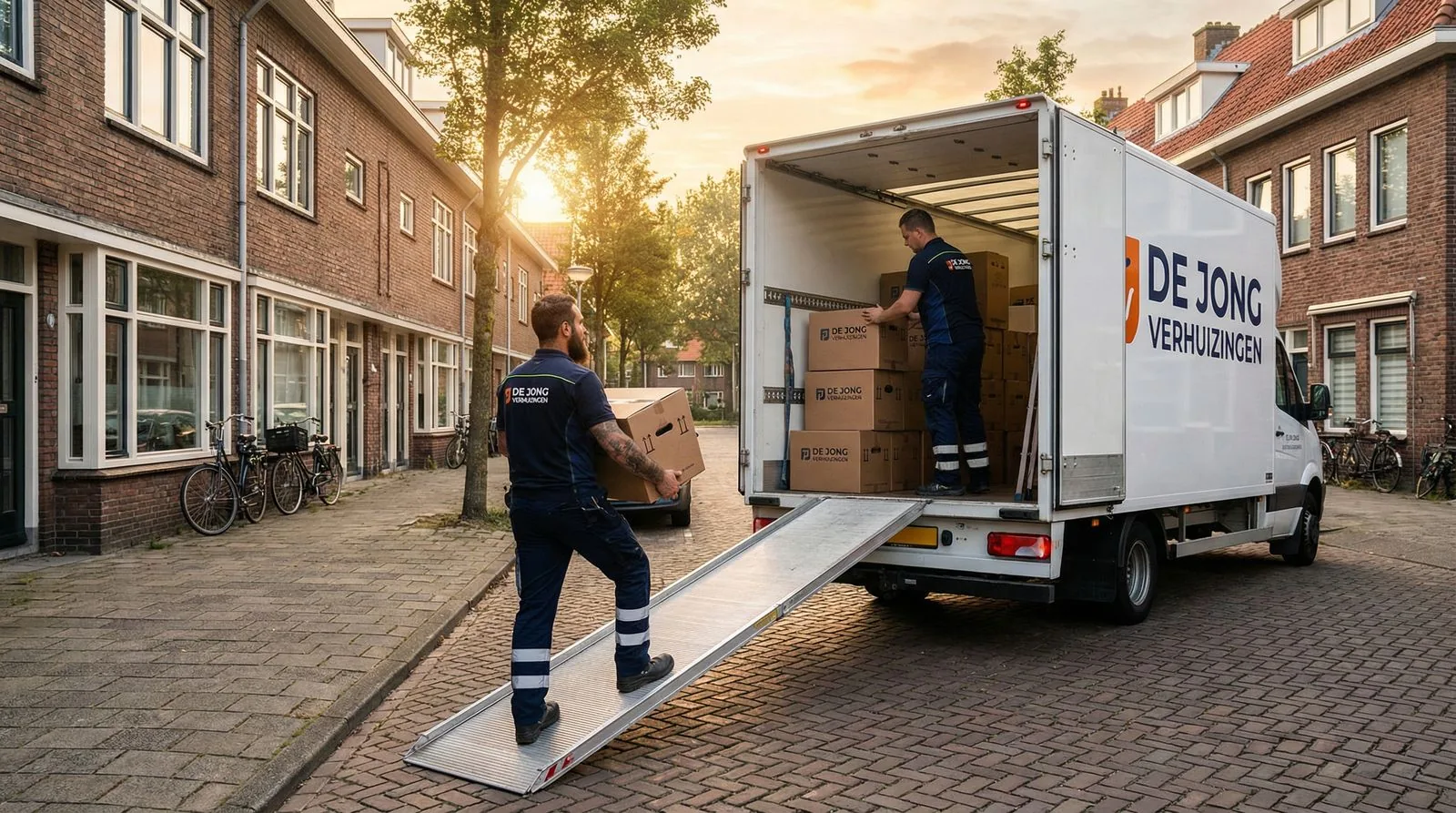
Monday morning, quarter past eight. The planner looks at the board and sees that the last Friday of the month is already full. He has to move two requests for that day, and one goes to a competitor. A year ago he would still have had room.
That is how the 2026 moving market feels for many Dutch moving companies. There is plenty of work. Every job just costs more than last year, and the people to do it are harder to find. These are the trends that really matter, and what you do about them.
Is the moving market getting busier?
Yes. According to Statistics Netherlands (CBS), almost 239,000 homes were sold in 2025, nearly 16% more than a year earlier. And the market is still moving: in the second quarter of 2026, according to the Dutch estate agents' association NVM, more existing homes came on the market than in any quarter since 1995.
For you that means more requests, and often larger moves too. More homes are coming on the market, prices are rising less steeply than last year, and so more people take the next step up the housing ladder. Someone moving from a flat to a family home moves more cubic metres than a first-time buyer. And every home that becomes free often leads to a second move.
The picture does differ by region. Shortages are greatest in the big cities, and outside them people more often move over longer distances. So look at your own requests, not just the national average.
Why are your costs rising faster than your revenue?
Because your costs went up on several fronts at once this year. Under the collective agreement, wages rose 4% on 1 January, and that flows through into holiday pay, pension and contributions. On top of that, since 1 July you pay the truck toll for every kilometre driven with your heavier trucks.
More work is therefore not automatically more profit. If your rates are still last year's, you earn less on every extra job than you think. What an hour of work really costs you, we worked out in the real cost of a mover per hour.
The question is not whether your rates need to go up. The question is by how much, and for which jobs.
Why do staff remain the bottleneck?
Because the market is growing and the number of people who want to do heavy physical work is not. More jobs need more crews, and good movers and drivers are hard to come by. For many moving companies the limit is not the number of requests but the number of people.
That means two things. Look after your own team, with fair hours, clear agreements and a schedule that does not change every day. And keep a standing flexible pool for peak weeks, with agency staff or fellow movers you exchange capacity with. How to attract drivers is covered in attracting drivers: 5 tips.
What do you do about it as a moving company?
You get more out of the people and trucks you already have, and you charge a price that matches what the work costs now. Four things make the difference.
- Plan more tightly. Check each week where your crews and trucks are idle, and fill those gaps with the jobs you would otherwise move. With digital planning you see at a glance where there is still room.
- Recalculate your rate. Include the new wages and the truck toll, and calculate per type of job instead of one percentage for everything.
- Know what each job earns. An office move, a job with storage or a long-distance run each earn something different. With your figures in insight you see which jobs make your margin and which cost it.
- Prepare for the peak. The busiest weeks come back every year. If you sort out holidays, fixed crews and your flexible pool in time, the peak becomes the best weeks of the year. See surviving the summer peak.
Want to know how far the industry has come with electric trucks, and what that saves on the toll? Read electric moving in 2026.
Shall we grab a coffee?
Let’s talk about how to handle the busy market of 2026 well.
Online or on location, you choose.
CBS (Statistics Netherlands), "Koopwoningen in december bijna 6 procent duurder dan jaar eerder" (22 January 2026): 238,695 homes were sold in 2025, almost 16 percent more than a year earlier. NVM, record number of homes put up for sale in the second quarter (9 July 2026). Collective labour agreement for Road Haulage 2026 (TLN), 4% wage increase from 1 January 2026.